Newborn Photo Editing: Mastering Complex Workflows
By Imagick Editorial Team · Published
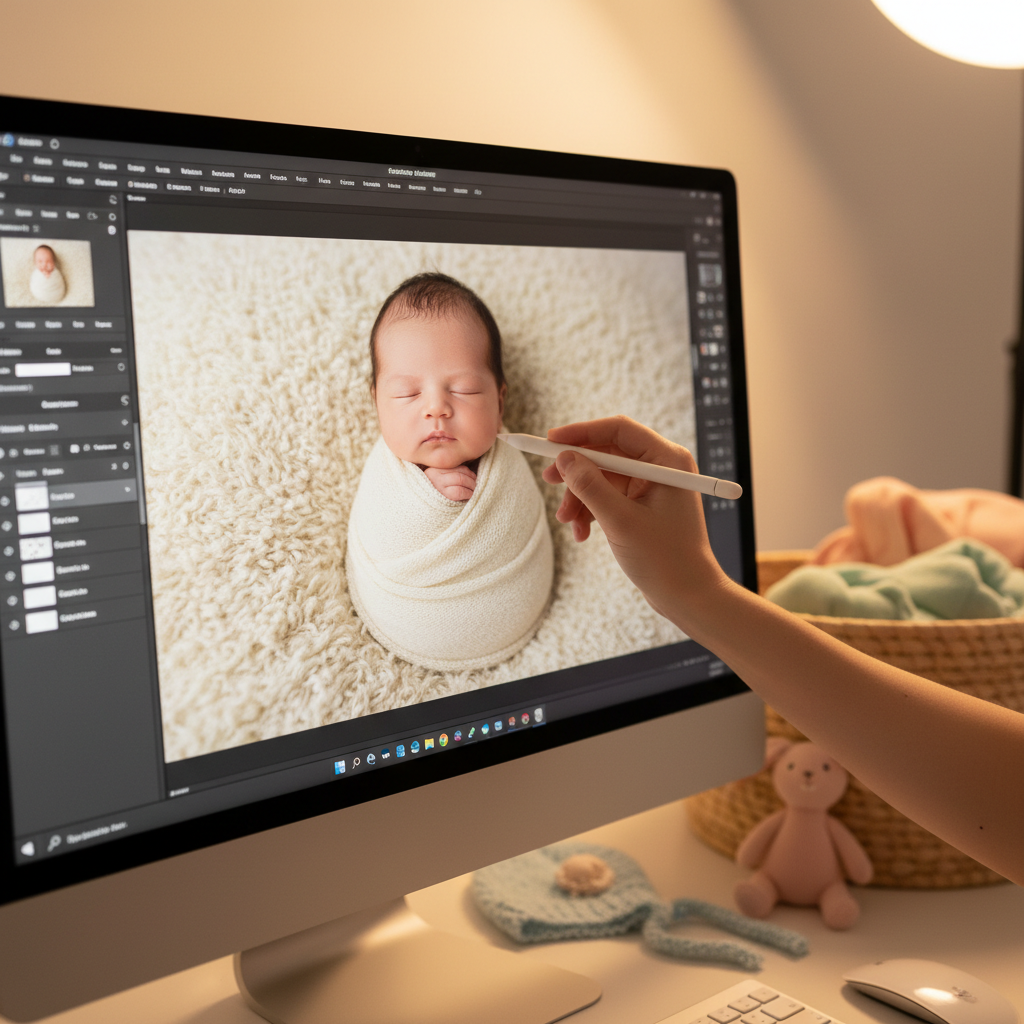
Newborn photography is a specialized field that captures fleeting moments of early life, creating cherished heirlooms for families. While the on-set session requires patience and expertise, the post-processing phase often accounts for a substantial portion of the total project time. Professional photographers frequently find themselves dedicating extensive hours to each newborn gallery, a commitment driven by the pursuit of perfection and the unique demands of this delicate subject.
The Intricacies of Newborn Photography Post-Processing
The perception that photo editing is a quick task often contrasts sharply with the reality of newborn photography. Unlike other genres where minor adjustments suffice, newborn images frequently require extensive, detailed work. The goal is to present a baby in an idealized, serene state, free from the common, yet temporary, imperfections of infancy.
This pursuit of perfection necessitates a deep dive into various editing techniques. Every image must convey a sense of calm and purity, which often means addressing elements that are natural but not aesthetically desired in a final portrait. The meticulous nature of these tasks is a primary factor contributing to the extended post-processing timelines.
Core Challenges in Newborn Photo Editing
Several specific challenges contribute to the time-intensive nature of newborn photo editing:
Skin Imperfections
Newborn skin is delicate and can present a range of temporary conditions. Flaky skin, redness, jaundice, baby acne, and tiny scratches are common. Each of these requires careful, localized retouching to achieve a smooth, even skin tone without making the baby appear artificial. This often involves techniques like frequency separation and precise color correction, applied with a light touch to maintain natural texture.
Safety Composites
Many popular newborn poses, such as the 'froggy pose' or head-in-hands, are achieved through composites for the baby's safety. This involves blending multiple images where a parent or assistant supports the baby, then meticulously removing the supporting hands and seamlessly merging the different layers. This process demands precise masking, alignment, and color matching to create a believable, single image.
Environmental Distractions
Even with careful on-set preparation, minor distractions can appear. This includes stray hairs on blankets, wrinkles in backdrops, reflections, or even small imperfections in props. Removing these elements requires cloning, healing, or content-aware fill tools, often applied to large areas with careful attention to maintaining the integrity of the background texture.
Color Consistency and Toning
Maintaining consistent and natural skin tones across an entire gallery is crucial. Newborns can exhibit subtle color shifts depending on their body temperature, feeding, or even the angle of light. Achieving a cohesive look while ensuring each baby's unique complexion is accurately represented demands careful color grading and localized adjustments.
Deconstructing the Editing Workflow
A typical newborn editing workflow involves several stages, each contributing to the overall time commitment:
1. Culling: Selecting the strongest images from the session. This initial review sets the foundation for the entire gallery.
2. Basic Adjustments: Applying initial corrections for exposure, white balance, and contrast. While often batch-processed, newborn images may require individual fine-tuning.
3. Retouching: The most time-consuming phase. This includes blemish removal, skin smoothing, color correction for redness or jaundice, and evening out skin tones. This stage often involves detailed brushwork and layer adjustments.
4. Compositing: For safety poses, this involves layering, masking, and blending multiple shots into a single, seamless image.
5. Background Cleanup: Removing any distracting elements from the backdrop or props, ensuring a clean, uncluttered frame.
6. Final Touches: Sharpening, noise reduction, and overall artistic toning to achieve the desired aesthetic and prepare for print or digital delivery.
Strategies for Workflow Efficiency
While newborn editing is inherently time-intensive, professional photographers can implement strategies to optimize their workflow:
* On-Set Precision: Minimizing issues during the shoot reduces editing time. This includes meticulous posing, careful prop placement, and vigilant attention to backdrop cleanliness.
* Consistent Shooting: Maintaining consistent lighting and camera settings throughout a session can simplify batch processing and reduce variations that require individual correction.
* Preset Utilization: Developing custom presets for common adjustments can accelerate the initial editing stages. However, these often serve as a starting point, requiring manual refinement for newborn skin tones.
* Keyboard Shortcuts and Custom Panels: Mastering editing software shortcuts and customizing panels can significantly speed up repetitive tasks.
* Batch Processing: Applying initial adjustments to groups of similar images can save time before moving to individual, detailed retouching.
Integrating AI into Newborn Post-Processing
Artificial intelligence (AI) tools are increasingly becoming part of the professional photographer's toolkit, offering potential for efficiency gains in specific areas of newborn post-processing. AI can assist with tasks that are repetitive or require pattern recognition, allowing photographers to focus on the more nuanced, artistic aspects of their work.
* AI for Culling: Some AI tools can analyze images for focus, expressions, and technical quality, providing a preliminary selection that can reduce manual culling time.
* AI for Basic Adjustments: AI can offer intelligent suggestions for exposure, white balance, and color correction. For instance, platforms like Imagick.ai can assist with color matching and consistency across a gallery, providing a strong foundation for further manual refinement. This can be a valuable step in an AI photo editing workflow.
* AI for Skin Retouching: While AI can perform general skin smoothing, the delicate nature of newborn skin often requires manual oversight to ensure natural results. AI-generated edits may serve as a base layer, but human judgment is typically needed for fine-tuning to avoid an overly processed look. For a broader perspective on AI capabilities, consider an AI editing comparison.
* AI for Background Cleanup: AI-powered object removal or content-aware fill tools can expedite the cleanup of minor distractions or the extension of backdrops. However, complex composites or intricate details still benefit from manual precision.
When integrating AI, it is crucial to maintain rigorous quality control. Photographers should evaluate AI outputs critically, ensuring they align with their artistic vision and professional standards. Understanding the capabilities and limitations of AI tools is key to responsible implementation, as outlined in frameworks like the NIST AI Risk Management Framework. For more insights into AI's role in specific photography genres, explore resources like AI Portrait Photography: Speed Meets Quality.
Maintaining Quality and Professional Standards
Despite the pressures of time, maintaining high quality is paramount in newborn photography. A structured review process, including viewing images on calibrated screens and taking breaks to refresh perspective, helps ensure consistency and catch any overlooked details. Managing client expectations regarding delivery timelines is also essential, allowing adequate time for the meticulous work required. Proactive strategies to avoid missed wedding photo deadlines: proven strategies can be adapted to newborn photography to ensure timely delivery.
Practical Newborn Editing Checklist:
* Cull: Select best images, prioritizing focus and expression.
* Basic Adjustments: Apply global exposure, white balance, and contrast corrections.
* Retouch Skin: Address flakes, redness, jaundice, and blemishes with localized adjustments.
* Composite (if needed): Seamlessly blend multiple images for safety poses.
* Clean Background: Remove distractions, wrinkles, or stray elements.
* Color Grade: Ensure consistent and natural skin tones across the gallery.
* Final Polish: Apply sharpening, noise reduction, and artistic touches.
* Quality Check: Review all images on multiple screens for consistency and detail.
The extensive time commitment in newborn photo editing is a reflection of the specialized skill and dedication required to transform raw captures into timeless portraits. By understanding the unique challenges and strategically implementing efficient workflows, including the judicious use of AI, professional photographers can manage their time effectively while consistently delivering exceptional results.
Continue building a reliable editing workflow
Review the Imagick AI workflow, compare options in the AI editing comparison, and check current pricing. For broader professional education, visit Professional Photographers of America.